
One often encounters the claim that sun tanning is responsible for around 90% of skin aging. This actually comes with some heavy qualifiers and there are factors that are probably even more significant, but it is hard to deny that heavy sun exposure frequently leads to a prematurely aged look.
This poses a major problem for those of us who are interested in preserving a youthful appearance as long as possible, while also maintaining a tan and reaping some of the other benefits of skin exposure to the sun that shall be discussed in more detail in a later blogpost.
In this series of blogposts I will outline a novel approach to reducing the damaging effects of UV exposure while acquiring a lasting tan using the peptide melanotan 2 that has been widely used to speed up the process of skin tanning. In the first post of this series I quickly outline the basic underlying mechanisms and the theory.
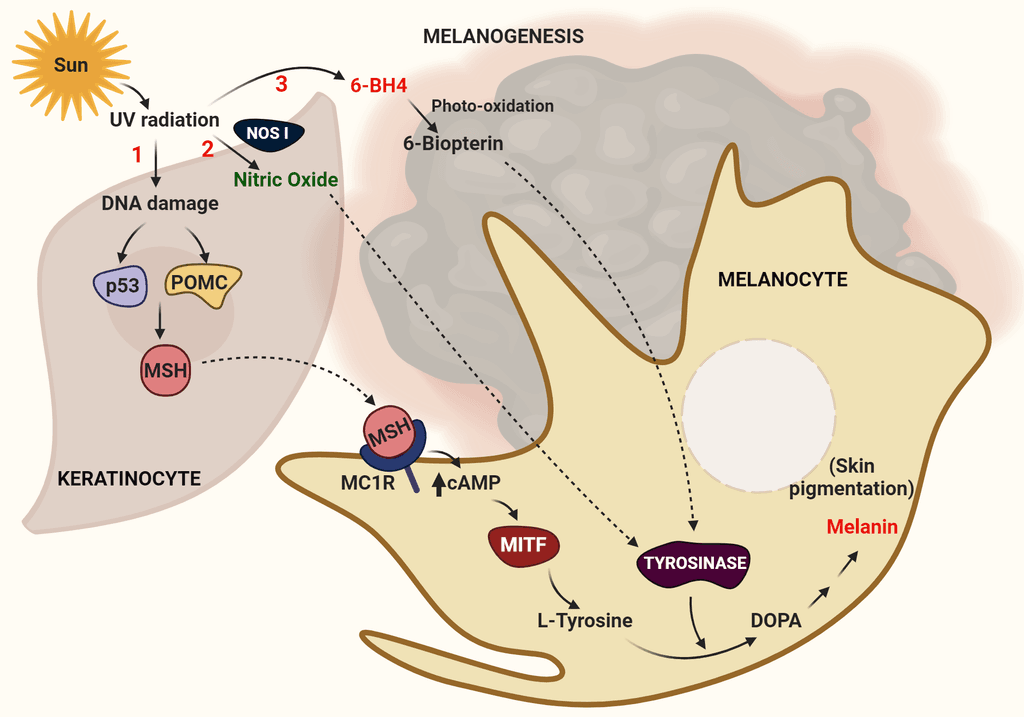
α-MSH (alpha-melanocyte-stimulating hormone) is produced in sun exposure of the skin via DNA damage in the keranocytes. This is were our peptide melanotan-2 comes in and substitutes MSH. The former is much more stable resulting in more sustained melanocyte stimulation, and does not require radiation damage to the keranocytes since we inject it or absorb it via the mucus membranes.
The mechanism is that we want to the take advantage of to reduce the damaging effects of radiation while trying to acquire a lasting tan is the fact that melanotan-2 shifts the balance towards UVB in terms of effectiveness and helps us to rely mostly on melaningenesis rather than the oxidation of existing melanin. The advantages of this are twofold:
In the following posts of this series we will discuss some methods to make use of these processes.
1. The tan acquired we melanigenesis is by its nature much more long-lasting. We are creating new melanin that can provide a visible tan for weeks until ketinocyte shedding occurs. It also provides some additional protection against sun damage.
2. UVA is the main driver of photoaging since it reaches down to the dermes where it destroys collagen and elastine via ROS (reactive oxygen species) that activate matrix metaloproteinases. If we rely on UVB for tanning we can minimize UVA.
Disclaimer: The content of this blog primarily consists of speculation & personal opinion, and does not constitute medical advice. Medical professionals, scientists and everyone more knowledgeable and intelligent than the author of this blog are invited and encouraged to voice their criticisms, corrections and objections.


Leave a Reply